
Despite economic headwinds, PUMA remains committed to long-term brand growth
Overview
PUMA delivered solid financial results in FY 2024, achieving currency-adjusted sales growth of 4.4% and improving its gross profit margin despite currency headwinds. The company made significant progress with its Brand Elevation Strategy, strengthening its performance credibility and consumer engagement. However, profitability remained stagnant, leading the company to initiate its nextlevel efficiency program to address cost trends and enhance long-term financial performance.
CEO Arne Freundt emphasized PUMA’s focus on brand elevation, innovation, and operational efficiency, acknowledging 2025 as a challenging year due to geopolitical and macroeconomic headwinds but remaining optimistic about long-term growth potential.
Q4 2024 vs. Q4 2023:
- Revenue rose to €2.29bn (+9.8% YoY at currency-adjusted basis), driven by growth across all regions and product categories.
- Sales in the EMEA region increased to €796.5m (+14.6% YoY), driven by double-digit growth in Europe and EEMEA.
- In the Americas region, sales increased to €986.3m (+6.5% YoY), with both North America and Latin America contributing to the growth.
- The Asia/Pacific region recorded sales of €506.6m (+9.5% YoY), reflecting stronger growth when compared to the first nine months of 2024 despite an ongoing softness in Greater China.
- Sales in Footwear increased to €1.21bn (+9.2% YoY), with important growth in Performance and Sportstyle.
- Sales in Accessories grew to €338m (+14.5% YoY), reflecting strong consumer demand.
- Apparel sales increased to €736.5m (+8.8% YoY), driven by Teamsport and Running categories.
- PUMA’s Wholesale business grew to €1.53bn (+6.9% YoY), supported by strategic retail partnerships.
- Direct-to-Consumer (DTC) business grew to €763.5m (+16.1% YoY), with e-commerce growing 22.0%, which was in line with the year-to-date trend and reflects the continued brand momentum.
- Operating expenses (OPEX) increased to €982.2m (+15.8% YoY), primarily driven by a lower base resulting from the Argentine peso devaluation in the previous year’s quarter, an increased DTC share, and investments in infrastructure
- The operating result (EBIT) increased to €108.9m (+15.3% YoY), with margin of 4.8% (flat YoY), due to sales growth and gross profit margin improvement.
- Net income for the quarter came in at €24.5m, a significant improvement from €0.8m in Q4 2023, with EPS amounted to €0.16 (compared to only €0.01 in Q4 2023).
Full-Year 2024 highlights:
- Total revenue rose to €8.82bn (+4.4% YoY at currency-adjusted basis), with growth across all regions and product divisions. As anticipated, currencies were a major headwind in 2024, negatively impacting sales in euro terms by approximately €150m.
- The Americas region recorded the highest growth with sale of €3.54bn (+7.0% YoY).
- Asia/Pacific region recorded sales of €1.81bn (+3.8% YoY), with all major markets, including Greater China, Japan, and India, contributed to this growth.
- The EMEA region sales also increased to €3.48bn (+2.1% YoY).
- Sales in Footwear increased to €4.73bn (+5.4% YoY), driven by growth in the Sportstyle Core and Kids business as well as Performance categories, mainly Running and Teamsport.
- Apparel sales grew to €2.81bn (+3.7% YoY), led by the Teamsport business.
- Accessories sales increased slightly to a value of €1.27bn (+2.0% YoY).
- PUMA’s Wholesale business grew very slowly to €6.39bn (+0.4% YoY), due to a strong focus on sell-through in the first half of 2024, setting up for better sell-in in the second half of 2024.
- DTC business increased to €2.43bn (+16.6% YoY), driven by brand demand and the opening of new stores.
- Gross profit margin was 47.4% (up 100 basis points vs. 2023), despite currency fluctuations and a promotional retail environment.
- OPEX for the full-year increased to €3.58bn (+5.2% YoY), reflecting higher investment in DTC and infrastructure.
- EBIT recorded a value of €622m (flat YoY), with an EBIT margin of 7.1% (compared to 7.2% in 2023).
- Net income declined to €281.6m (-7.6% YoY), with EPS amounted to €1.89 (compared to €2.03 in 2023), primarily due to higher net interest expenses and non-controlling interests.
- Free cash flow recorded a value of €464.3m (+25.8% YoY), supporting future investments.
- Inventories increased to €2.01bn (+11.6% YoY), driven by a strong increase in goods in transit to serve the new product cycle in 2025.
- Proposed dividend was €0.61 per share and 2024 share buyback of €50m will result in total payout of 50% of net income.
For 2025 outlook, PUMA anticipates currency-adjusted revenue growth in the low-to mid-single-digit range, reflecting macroeconomic uncertainty and currency volatility. The company projects adjusted EBIT between €520m and €600m, supported by cost savings from the nextlevel efficiency program, which aims to enhance profitability through operational improvements. Capital expenditures (CAPEX) of approximately €300m will be directed toward retail store expansion, e-commerce, and infrastructure investments, reinforcing PUMA’s long-term growth strategy. The company remains committed to brand elevation and digital transformation, strengthening direct-to-consumer channels and wholesale partnerships. While geopolitical and economic challenges persist, PUMA is confident that its efficiency measures and strategic initiatives will help offset cost pressures and drive sustainable profitability in the years ahead.
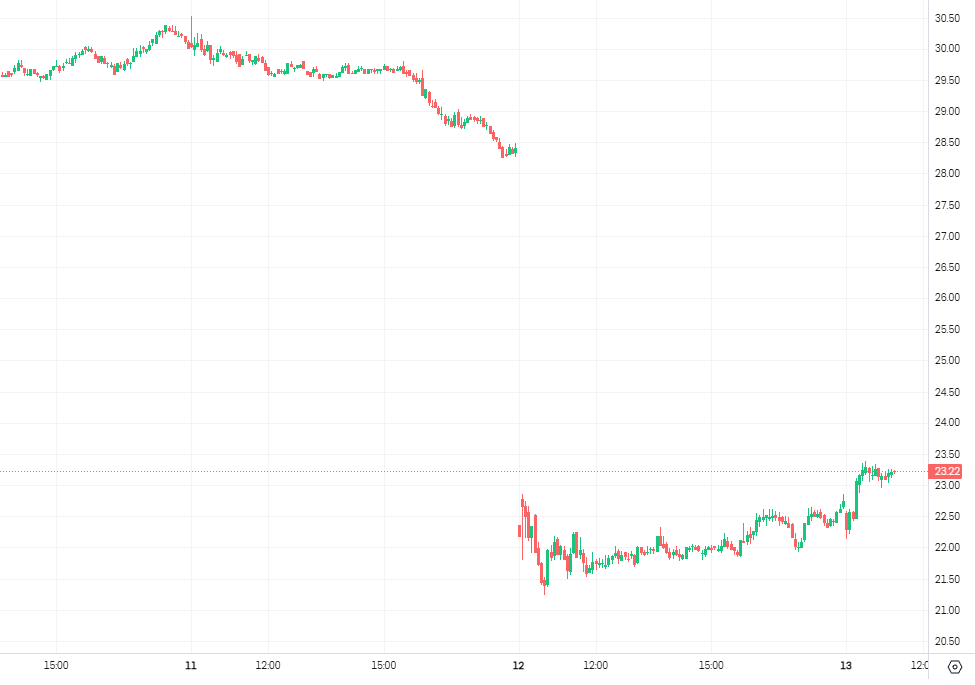
The increasing volatility and uncertainty in the market brought a significant drop in the stock price of PUM shares, which fell by approximately -18% after the publication of the annual results, which led the stock price to a historical low for the company in recent years, the downward trend maintaining at a fairly sharp pace. In the last year, PUM shares are trading at a lower market price by -44.5%, and despite the optimism coming from the management, investors do not offer the same feelings towards the future of the company.
Author: Ionuț-Adrian Lazar
Discover more from FSEGA Investment Club
Subscribe to get the latest posts sent to your email.